
Plastic use in Bangladesh has increased significantly in recent years, particularly in packaging and single-use products. While this has supported economic growth, inadequate waste management systems, lack of segregation, and high dependence on single-use plastics have created an increasingly serious environmental challenge.
A large share of plastic waste remains mismanaged, often entering drains, rivers, and eventually the marine environment, contributing to flooding, ecosystem degradation, and marine litter. Open dumping and burning of plastic waste also release harmful pollutants, posing risks to human health, including respiratory issues and exposure to toxic substances.
In response to these challenges, the project “Integrated Approach Towards Sustainable Plastics Use and Marine Litter Prevention in Bangladesh” has been developed to address plastic pollution through a comprehensive and coordinated approach across policy, industry, community engagement, and waste management systems.
Output 1: Policy Development, Support and Dialogue
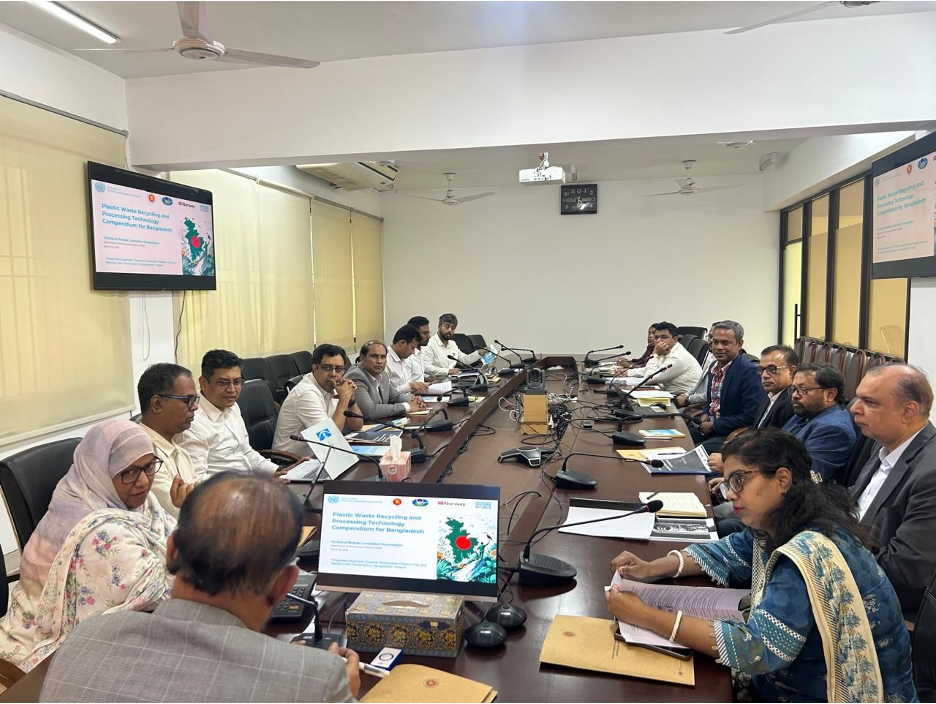
The project strengthens Bangladesh’s policy and regulatory framework to address plastic pollution through evidence-based assessments, stakeholder engagement, and institutional coordination. It supports the development of key policy instruments, including the Extended Producer Responsibility (EPR) Guidelines, and contributes to the review and updating of Biomedical Waste Management Rules, integrating field-level insights from pilot initiatives. The project has conducted a Rapid Baseline Assessment of Plastic Waste Management in Bangladesh, alongside a series of stakeholder consultations and technical review processes to inform policy decisions. Through national seminars, trainings, and high-level dialogues, it has engaged ministries, industry, academia, and development partners to build consensus on plastic management priorities. The project has also supported Bangladesh’s participation in the Intergovernmental Negotiating Committee (INC) process on global plastic treaty development, contributing to national position-setting. In parallel, targeted policy discussions have advanced single-use plastic phase-out strategies, including implementation planning and institutional coordination at the Bangladesh Secretariat. These combined efforts contribute to strengthening governance, aligning national frameworks with global commitments, and enabling more effective plastic waste management systems in Bangladesh.
Notable Achievements:
• Development and submission of EPR Guidelines (Bangla and English)
• Review and updating of Biomedical Waste Management Rules through field-based inputs
• Completion of Rapid Baseline Assessment on Plastic Waste Management (under validation)
• Organization of baseline assessment seminars with 200+ stakeholders
• Engagement in INC process, including preparation of national position inputs
• 12+ policy seminars and 8 training programmes with government, industry, and stakeholders
• High-level policy dialogue on single-use plastic phase-out strategies
• Multi-stakeholder consultations with ministries, private sector, academia, and NGOs
• Strengthening of institutional coordination mechanisms across government
Output 2: Consumer Awareness and Action
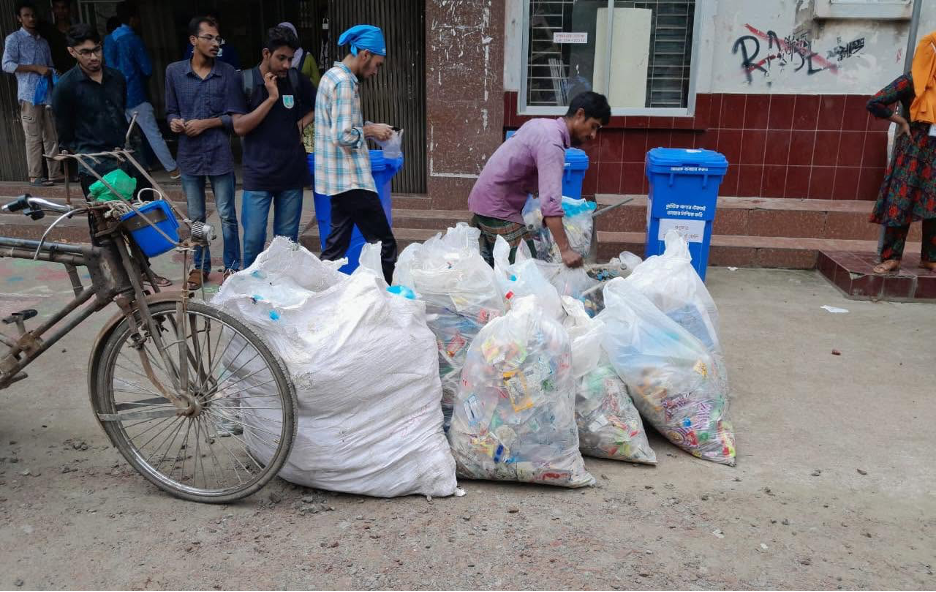
The project drives large-scale behavioural change by engaging communities, institutions, and youth across Bangladesh to reduce plastic use and improve waste management practices. Through a combination of nationwide clean-up campaigns, seminars, training programmes, and targeted awareness initiatives, the project has mobilized action across urban, rural, and coastal regions, including ecologically sensitive areas and high-footfall public spaces. It has worked extensively with schools and universities, establishing eco-clubs, conducting training programmes, and organizing national inter-school and inter-university debate competitions to promote youth leadership and policy awareness. In coastal regions, particularly Cox’s Bazar and surrounding areas, the project has engaged fishing communities to develop community-led models for marine litter collection, linking local action with recycling systems. Large-scale public campaigns at tourist sites, stadiums, universities, and communities have strengthened awareness and encouraged responsible consumption practices. Supported by strong media outreach and stakeholder partnerships, these initiatives have contributed to shifting public attitudes, fostering ownership, and promoting sustained behavioural change across diverse population groups in Bangladesh.
Notable Achievements:
• 40+ nationwide clean-up campaigns and awareness events across urban, rural, and coastal areas
• Engagement of 17,000+ volunteers, including strong participation of women and youth
• Removal of significant volumes of plastic waste from beaches, communities, and public spaces
• Establishment of school eco-clubs and awareness programmes reaching thousands of students
• National inter-school debate competitions engaging 1,350+ students and reaching 42,000+ people indirectly
• National inter-university debate competition engaging 36 universities, with 10,000+ direct participants and millions reached online
• Community engagement with 450+ fishers, including women, to develop marine litter collection models
• Awareness campaigns in tourist areas, universities, stadiums, and coastal zones
• Partnerships with 15+ community organisations supporting sustained local action
• Media reach of millions through national coverage and digital platforms
Output 3: Industry Awareness and Action
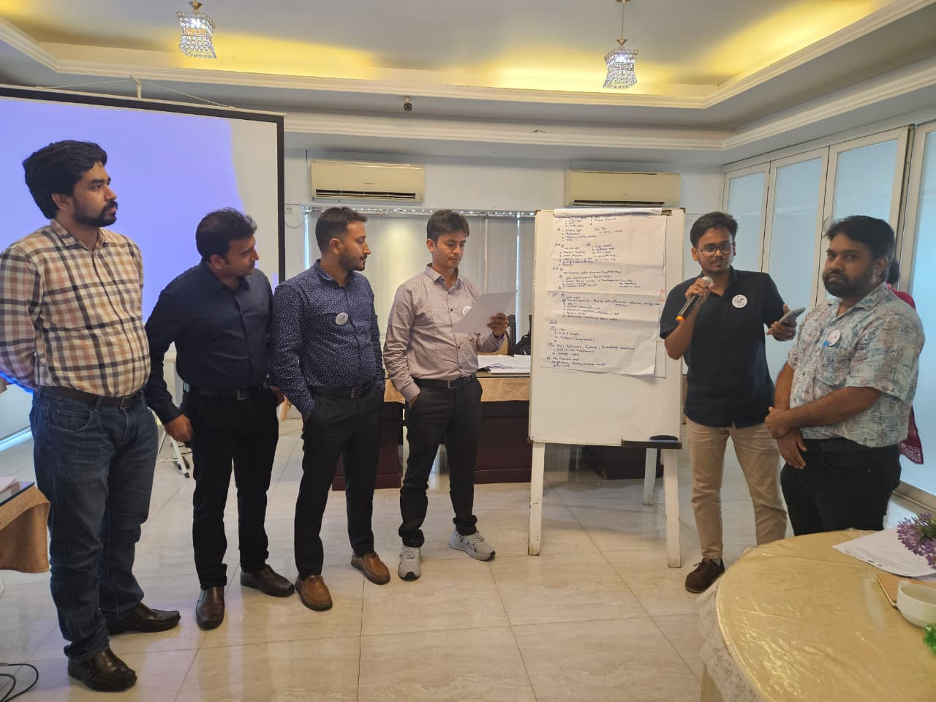
Resource Efficient and Cleaner Production (RECP) is a core approach under this output, supporting industries to optimize material use, reduce energy consumption, and minimize waste across production processes. The project has conducted extensive factory-level assessments, identifying practical opportunities for efficiency improvements, while delivering technical training programmes to industry professionals and government stakeholders. These efforts are complemented by industry partnerships and knowledge exchange platforms, enabling the adoption of RECP practices across multiple plastic manufacturing facilities in Bangladesh.
In parallel, the project promotes Design for Environment (DfE) to integrate sustainability into product design and packaging. Through targeted training programmes and technical guidance, industries are supported to adopt lifecycle-based approaches, improve material selection, and design products that are more resource-efficient, recyclable, and environmentally responsible. Initial implementation efforts focus on sectors such as plastic products, toys, and packaging, laying the foundation for wider adoption of eco-design practices across the value chain.
The project also addresses plastic waste in the healthcare sector through the development of a pilot biomedical waste management system in Sirajganj, introducing environmentally sound treatment technologies and operational frameworks. This includes the establishment of a common treatment facility equipped with an incinerator and autoclave, alongside training programmes for healthcare providers, local authorities, and operators. These interventions aim to ensure the safe handling, treatment, and disposal of biomedical plastic waste, contributing to improved environmental and public health outcomes.
Notable Achievements:
• Conducted 40+ RECP and DfE factory assessments
• Training of 80+ professionals from industry and government
• Collaboration with 28 plastic industries for RECP implementation
• Organization of national and international RECP training programmes (including AIT, Thailand)
• Delivery of DfE training programmes on product design and packaging
• Initiation of DfE implementation across multiple industry sectors
• Establishment of biomedical waste treatment facility in Sirajganj
• Procurement of advanced technologies (incinerator – Türkiye, autoclave – France)
• Training of 90+ healthcare stakeholders on biomedical waste management
• International exposure programmes for biomedical waste systems
Output 4: Recycling Industry Development
The project supports the development of a more structured, efficient, and inclusive recycling ecosystem in Bangladesh by strengthening technical capacity, improving coordination among stakeholders, and promoting circular economy approaches. It focuses on enhancing plastic waste recovery, improving recycling practices, and creating enabling conditions for sustainable recycling systems that integrate both formal and informal actors.
A key initiative under this output is the Cleantech Accelerator and Commercialisation Programme, implemented in partnership with the SME Foundation to support innovation in plastic recycling, circular design, and sustainable materials. The programme has engaged a nationwide pool of innovators, startups, and MSMEs through outreach, selection, and bootcamp processes, providing mentorship, technical guidance, and pathways for scaling solutions. Through structured evaluation and stakeholder engagement, the accelerator is strengthening Bangladesh’s cleantech innovation ecosystem and promoting market-ready solutions for plastic waste management.
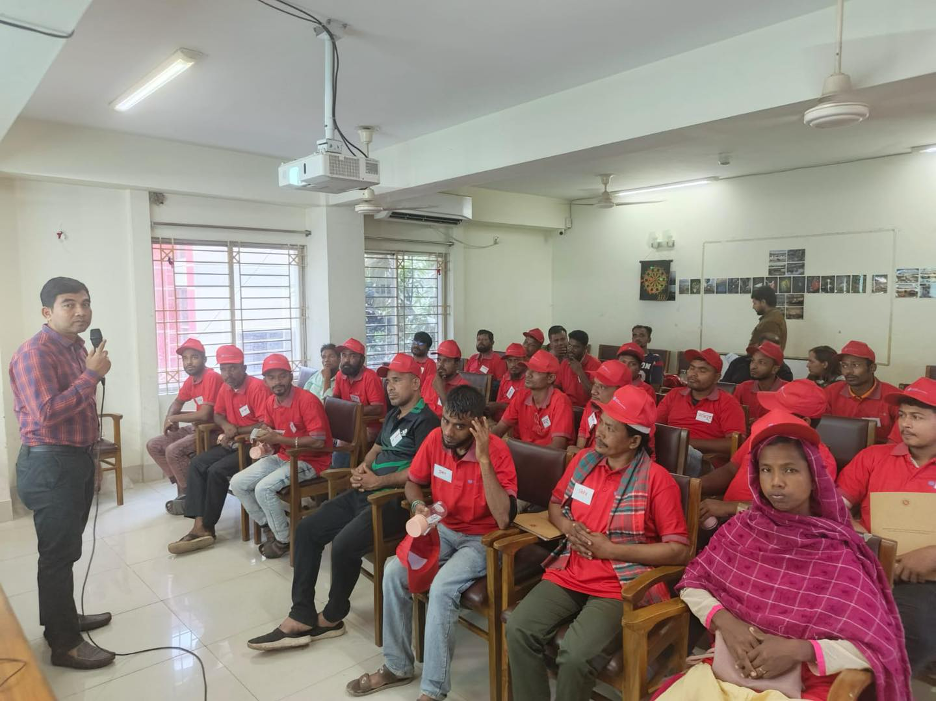
The project also strengthens the capacity of informal and semi-formal recycling actors, who play a critical role in Bangladesh’s recycling value chain. Through targeted training programmes, these actors are supported in improving operational safety, material quality, and business practices, while promoting gradual integration into more structured and compliant recycling systems. These efforts contribute to building more resilient and inclusive recycling supply chains across the country.
In addition, the project has developed key knowledge products to guide sector development, including a Recycling Precinct Development Manual and a Plastic Waste Recycling and Processing Technology Compendium. These resources provide practical guidance on recycling infrastructure, technologies, environmental safeguards, and circular economy approaches. International training and exposure programmes further support knowledge transfer, enabling stakeholders to learn from global best practices and adapt them to the Bangladesh context.
Notable Achievements:
• Launch of the Cleantech Accelerator Programme in partnership with SME Foundation
• Engagement of 300+ innovators and entrepreneurs through nationwide outreach
• Multi-stage selection, bootcamp, and mentorship for top innovators
• Capacity-building programmes for 140+ informal and semi-formal recycling actors
• Strengthening of recycling supply chains through training and technical support
• Development and validation of Recycling Precinct Development Manual
• Development of Plastic Waste Recycling Technology Compendium
• Organization of international training on recycling technologies and circular economy (South Korea)
• Stakeholder consultations with DoE, industry, academia, and private sector actors
Output 5: Project Management, Monitoring and Evaluation
The project supports the development of integrated platforms to address data gaps, improve knowledge sharing, and promote innovation in plastic waste management. These platforms enable informed decision-making and strengthen coordination across sectors.
PlasticPath has been developed as a key output of this project, serving as a centralized digital platform to connect knowledge, action, and data, and support coordinated efforts towards sustainable plastic use and marine litter prevention in Bangladesh.
Integrated Approach Towards Sustainable Plastics Use and Marine Litter Prevention in Bangladesh for Inclusive and Sustainable Industrial Development
Project ID
- 190230
Overall Budget
- USD 4,115,984.00
Project Donor
- Government of Norway, Ministry of Foreign Affairs
Government Counterpart
- Ministry of Environment, Forest and Climate Change
Counterpart for Execution
- Department of Environment
Contribution to UNIDO Global SP
- Inclusive and Sustainable Industrial Development (ISID)
- Environmental Sustainability
- Innovation and Cleantech Development
- Global Cooperation and Knowledge Sharing