
What Happens to Plastic After It Is Discarded?
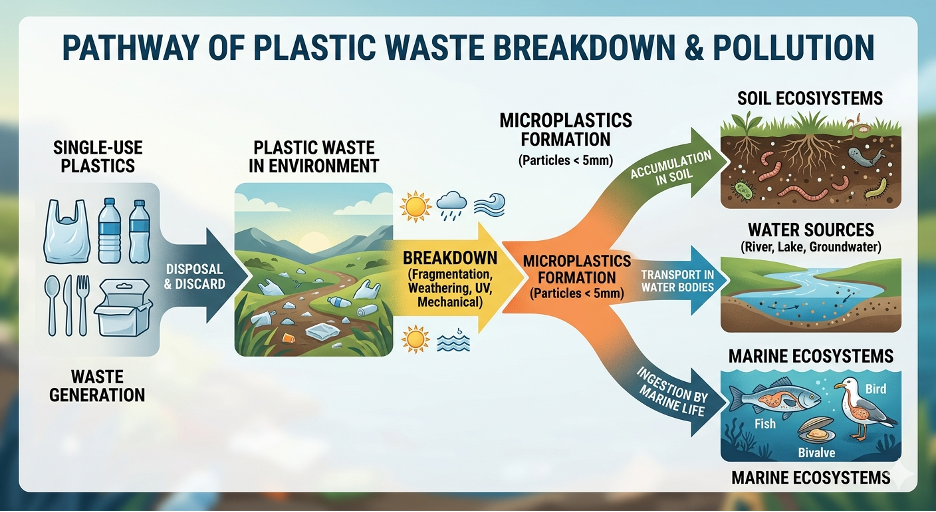
Plastic waste does not disappear after it is discarded. Instead, it breaks down slowly into smaller fragments through sunlight, heat, and physical processes. Over time, larger plastic items degrade into microplastics (particles smaller than 5 mm) and even nano plastics, which persist in the environment.
These particles spread across land, rivers, and oceans, and can remain in ecosystems for decades or even centuries. As they move through natural systems, they interact with soil, water, and living organisms, becoming part of broader environmental cycles rather than disappearing.
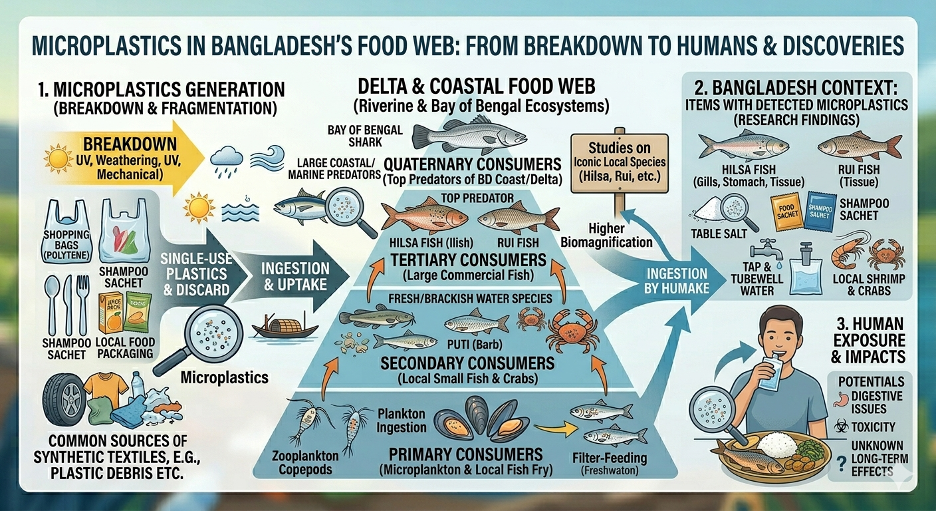
As plastics break down into microplastics, they are consumed by small organisms such as plankton and fish. These are then eaten by larger animals, allowing plastic particles to move through the food chain and eventually reach humans through food and water.
Human Exposure
Recent studies have shown that microplastics are now present in the human body. They have been detected in blood, lungs, and breast milk, indicating widespread exposure. Research has also identified microplastics in human reproductive systems, raising concerns about potential long-term health impacts.
Microplastics can enter the human body through food, drinking water, and air, making exposure difficult to avoid.
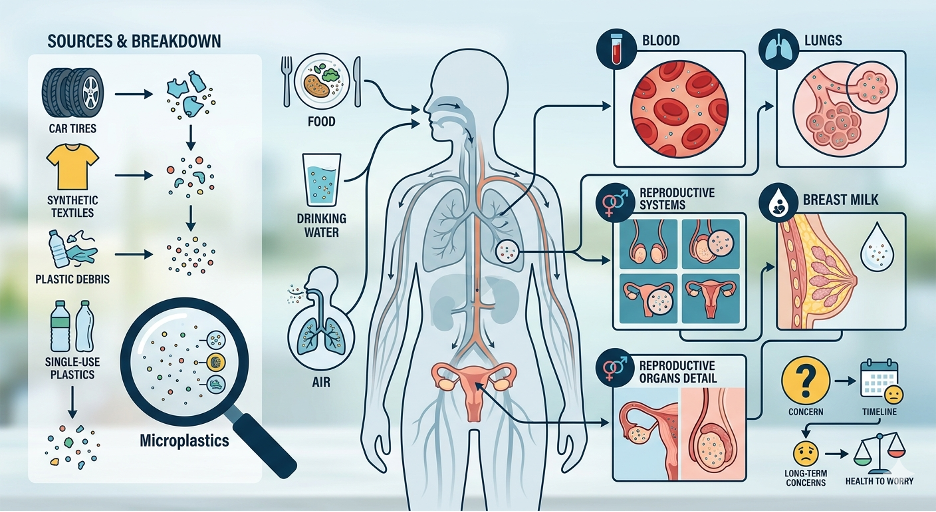
While research is still evolving, exposure to microplastics and associated chemicals may contribute to health risks such as inflammation, toxicity, and hormonal disruption. These findings highlight the need for further research and stronger measures to reduce plastic pollution.
Upcoming Events
Launching Ceremony of the PlasticPath Website & Mobile Application
The United Nations Industrial Development Organization (UNIDO), in collaboration with the Department of Environment (DoE) under the Ministry of Environment, Forest and Climate Change (MoEFCC), is plea...
- 16 Jun, 2026
- Conference Room of the Department of Environment, Agargaon, Dhaka
- Register Now
Become a Community Leader
Every cleanup starts with someone willing to take the first step. By registering as a Community Leader, you’re not just signing up for an event — you’re committing to be part of a growing movement that is reshaping how Bangladesh thinks about plastics. Read more...
• Registration is open to individuals, student groups, local organizations, and anyone passionate about creating change.
• Once you register, you’ll receive guidance and resources to help you plan and lead cleanup activities in your area.
• You’ll also join a wider network of changemakers working together towards a cleaner, healthier environment.
Register Now: Click here to request your registration

বর্জ্য ব্যবস্থাপনা তথ্য সংগ্রহ ফরম
Solid Waste Management Reporting Form
কঠিন বর্জ্য ব্যবস্থাপনা বিধিমালা, ২০২১-এর আলোকে এই তথ্য সংগ্রহ ফরমটি মূলত দেশের প্রতিটি স্থানীয় কর্তৃপক্ষ বা স্থানীয় সরকার প্রতিষ্ঠান (যেমন: সিটি কর্পোরেশন, পৌরসভা ও ইউনিয়ন পরিষদ) কর্তৃক তাদের আওতাধীন এলাকায় উৎপাদিত বর্জ্যের পরিমাণ, প্রকৃতি এবং ব্যবস্থাপনার প্রকৃত চিত্র তুলে ধরার একটি বিধিবদ্ধ মাধ্যম। এই ফরমের মাধ্যমে বর্জ্যের উৎসস্থল থেকে শুরু করে সংগ্রহ পদ্ধতি, পচনশীল ও অপচনশীল বর্জ্য পৃথকীকরণ, পরিবহনের ধরন, সেকেন্ডারি ট্রান্সফার স্টেশন (STS) এবং চূড়ান্ত ল্যান্ডফিল বা ডাম্পিং সাইটের বর্তমান অবস্থা সম্পর্কে বিস্তারিত উপাত্ত সংগ্রহ করা হয়।